The aim of evolutionary neuroscience is not just to document the history of brain evolution, but to explain it. (George F. Striedter, Brain Evolution)
Preparation
Before reading Hauser et al. 2000, review the following distinctions from evolutionary biology.
- characters that are derived vs. ancestral
- homology vs. analogy
- adaptation vs. exaptation
To get us started thinking about evolutionary biology and neuroscience, consider the following two quotes.
- In Brain Evolution, George F. Striedter writes “Historical explanations are really predictions in hindsight: given what we know, could we have predicted what actually came to pass? If the answer is affirmative, then we have explained the past.” Do you agree? Is being able to predict what actually came to pass the criterion for understanding historical events?
- Hodos & Campbell (1969) wrote “Once upon a time, biologists tended to think that evolution was guided by a single law of progression that caused simple organisms to become more complex, and ‘lower’ species to ascend ‘the scale,’ but that view is no longer tenable . Do you agree? If so, what is the explanation for the increasing `complexity’ of organisms that developed over the 4.5 billion years of life on earth?
Close reading and peer-to-peer discussion
- Read and annotate the this review article on the faculty of language. Hauser, M.D., Chomsky, N. and Fitch, W.T., 2002. The faculty of language: What is it, who has it, and how did it evolve?. Science, 298(5598), pp.1569-1579. [PDF] This link should take you to the assignment within Perusall. This assignment is due Tuesday midnight.
Class discussion
Class will meet via Zoom video conference at the normal time. A few minutes before 11:00am, please join the class using this stable URL: https://cwm.zoom.us/j/674322161
Response
- If the FLN is uniquely human, and was acquired through adaptive evolution, what “faculty” might it have evolved from? What aspect of the nonhuman prime mind is homologous to the FLN?
- Research on, and speculation over, “shared versus unique” is of great interest because the unique mental faculties and behaviors distinguish us as human animals. But are these unique mental faculties what makes us human? What aspects of the human being and experience are crucial and highly valued, and also shared with animals?
Further reading
Why Only Us: Language and Evolution by Robert C. Berwick and Noam Chomsky. The MIT Press, 2017.
Instructor notes
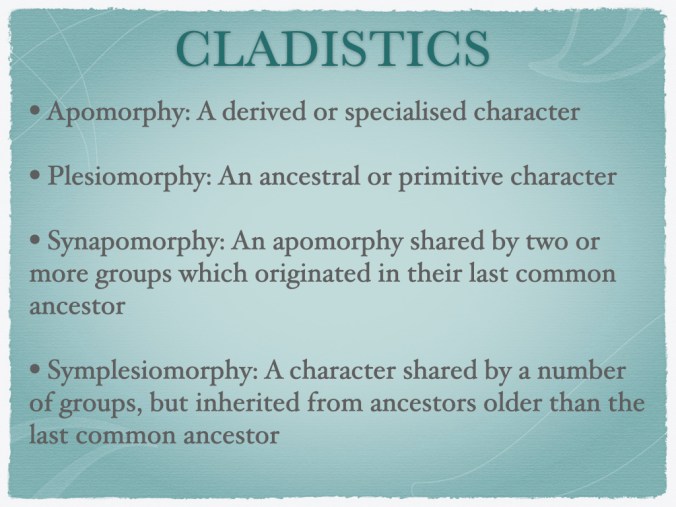
 This above slide is courtesy of Dan Grauer.
 Computational Neuroscience
You must be logged in to post a comment.